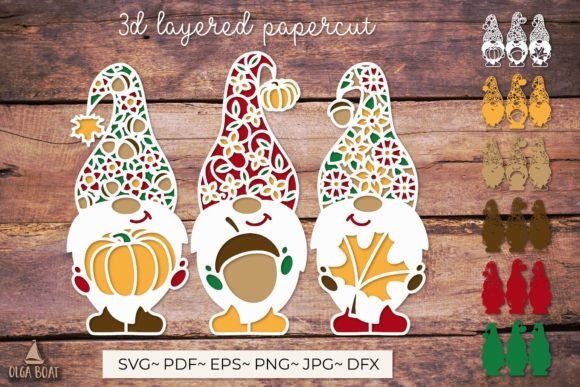
Autumn Gnome 3D Layered Papercut SVG Review
As a professional embroidery digitizer and product reviewer, I approach every new graphic asset with a specific question: will this actually translate into a high-quality stitched product? The Autumn Gnome 3d Layered Papercut Svg immediately catches the eye because of its dimensional aesthetic. While originally marketed for layered vinyl and papercut crafts, the distinct separation of shapes makes it a surprisingly strong candidate for adaptation into a machine embroidery design. When evaluating graphics for commercial embroidery or handmade products, we look for clear boundaries and logical layering, both of which are present in this gnome template.
The visual personality of this design is undeniably cozy. It evokes a rustic, hygge mood that resonates deeply with customers shopping for fall decor and seasonal apparel. The 12-inch baseline size provides ample resolution for digitizing, but as any experienced designer knows, scaling down is where the true test lies. For my review, I am assessing this graphic not just as a digital file, but as a potential bestseller for Etsy sellers and small shop owners who need reliable, attractive designs for the upcoming autumn rush.
Translating Papercut Layers to Stitched Texture
In a real-life production scenario, I recently prepared a custom embroidered sweatshirt for a boutique client who wanted a unique fall mascot. The Autumn Gnome 3d Layered Papercut Svg served as the perfect foundation. Because the graphic is designed with distinct layers to create a 3D effect, it naturally mimics the structure of an applique design. Instead of fighting against complex shading, I was able to assign specific fabric pieces to each vector layer. This reduces stitch density significantly compared to a full-fill embroidery file, resulting in a softer garment that retains the drape of the sweatshirt.
For this project, the layered nature allowed me to use different fabric textures to enhance the 3D illusion without relying solely on thread. The gnome’s hat utilized a waffle knit, while the beard was a plush minky, and the body was a standard cotton. This material contrast brings the "papercut" concept to life in a tactile way that flat embroidery cannot achieve. If you are creating a tote bag design or nursery decor, this layering technique adds perceived value. Customers recognize the extra effort involved in multi-fabric construction, making the finished product feel more like a premium handmade item rather than mass-produced merchandise.
Strategic Applications for Seasonal Merchandise
Versatility is key for any craft business or creative entrepreneur. This gnome graphic performs exceptionally well across various categories because of its scalable silhouette. For holiday embroidery projects, the shape is iconic enough to be recognized even at smaller sizes, provided the internal details are simplified. I can envision this working beautifully as an embroidered patch for denim jackets or caps, where the bold outlines maintain clarity against textured backgrounds.
However, the design truly shines in home decor and personalized gifts. Kitchen towels and pillow covers offer a stable canvas that supports the weight of multiple applique layers. When selling on platforms like Etsy, listing photos featuring this gnome on a tea towel or throw blanket tend to perform well because they sell a lifestyle, not just a product. For digital product sellers offering printable mockups, the clean vector lines of this SVG allow for easy color swapping to match different brand aesthetics. Whether you are producing baby embroidery items or adult custom apparel, the whimsical yet mature style of this gnome bridges the gap between childish and sophisticated.
Navigating Technical Limitations and Fabric Choices
Despite its strengths, the Autumn Gnome 3d Layered Papercut Svg requires careful handling during the digitization and stitching phases. Not every adaptation works on every surface. I advise extreme caution when attempting this design on stretchy fabrics like ribbed knits or thin performance wear. The multiple layers of applique add structural rigidity; if the base fabric stretches but the embroidery does not, you risk puckering or tunneling around the satin stitch borders.
Small hoop sizes also present a challenge. While the original 12-inch template is generous, reducing it below four inches demands significant simplification. Tiny corners in the gnome’s hat or intricate details in the foliage may turn into mud if the stitch density is too high. In these cases, converting detailed areas to running stitch or removing them entirely is necessary to preserve clarity. Additionally, dark fabrics require strategic planning. Since papercut styles often rely on shadow and depth, using dark thread on dark fabric can flatten the 3D effect. Always test your thread colors against the background fabric before committing to a full production run.
Curved surfaces like caps are another area requiring vigilance. The distortion inherent in cap frames can warp the precise alignment needed for a layered look. If you plan to use this for hat embroidery, consider digitizing a simplified, single-layer version specifically for curved framing, or stick to flat-brim hats that offer more stability. Always verify your stabilizer choice; a heavy-duty cutaway is non-negotiable for multi-layer applique to prevent shifting during the long stitch-out process.
Designer Notes for Professional Execution
To ensure your final output meets professional standards, treat the Autumn Gnome 3d Layered Papercut Svg as a blueprint rather than a finished map. Before listing any item for sale or delivering a client commission, follow these practical steps:
- Test on Scrap Fabric First: Never assume the digital preview equals physical reality. Stitch out a sample on the exact fabric and stabilizer combination you intend to use for the final product.
- Check Licensing Terms: Confirm whether your purchase includes commercial rights for finished products versus digital redistribution. As a digital embroidery file creator, protecting your intellectual property and respecting others' is vital for business integrity.
- Evaluate Stitch Density: Use your digitizing software to check for dense overlaps where layers meet. Excessive density causes needle breaks and stiff embroidery. Adjust compensation settings to account for fabric thickness.
- Mockup in Black and White: Viewing the design in grayscale helps identify value contrast issues. If the layers blend together without color, the 3D effect will fail in embroidery regardless of thread choice.
- Verify Hoop Compatibility: Ensure the scaled design fits comfortably within your machine’s maximum embroidery field with adequate clearance for the presser foot.
- Inspect Small Details: Zoom in to 400% to check for jagged nodes or open gaps in the vector lines that could cause registration errors during stitching.
Ultimately, the success of using this graphic depends on your willingness to adapt it to the medium of thread. It is a fantastic asset for autumn collections, offering a fresh alternative to traditional pumpkin or leaf motifs. By respecting the technical requirements of machine embroidery and leveraging the design's inherent layered structure, you can create standout items that delight customers and elevate your brand. Whether you are making a personalized gift for a loved one or stocking your shop for the fall season, this gnome provides a solid creative foundation when executed with precision and care.